You Don’t Need a Resume Objective That Sounds Like Everyone Else’s
If your resume starts with “Seeking a challenging position…”, you’re not alone. But you can do much better. Show them what you can actually do.

KaabilAI team
· 3 min read
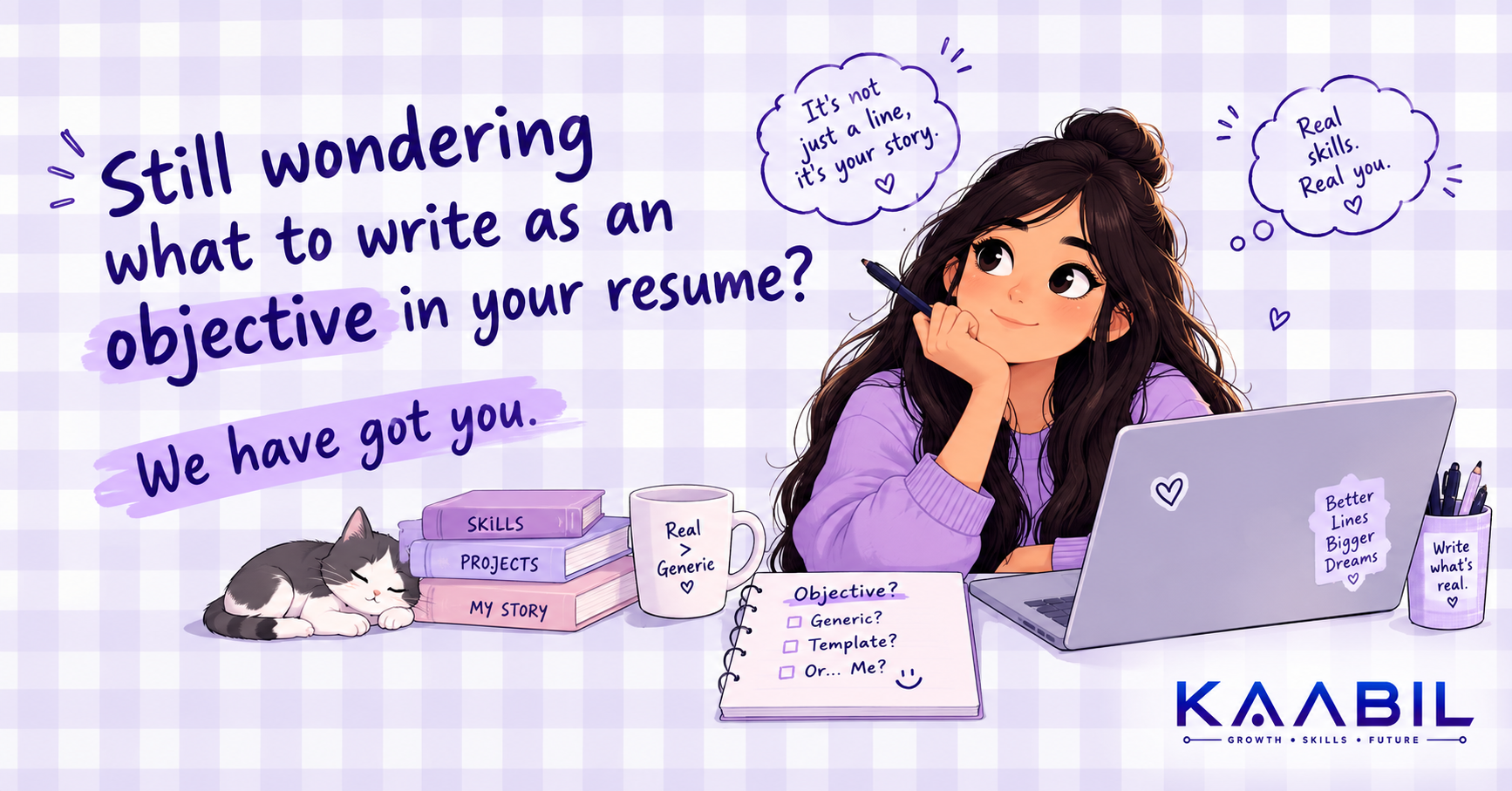
“Seeking a challenging position in a reputed organisation.”
You’ve seen it before.
You’ve probably typed it yourself.
Maybe it’s sitting right at the top of your resume right now, looking very… official.
But here’s the awkward bit.
So is everyone else’s.
If I open ten fresher resumes, eight of them start with that exact line, or something almost exactly like it.
It’s the national uniform of resume objectives.
We get it.
Writing an objective feels like one of those things you just have to do.
Someone said it goes on top, so it must be important.
But after reading line after line of “seeking growth opportunities” and “to contribute my skills”, do you think anyone actually remembers which resume was yours?
Let’s be real, most recruiters don’t even look at the objective if it sounds like a template.
It’s background noise.
It says nothing about what you can actually do.
And worse, sometimes it sounds like you’re trying to please every possible company at once.
No one hires someone just because they’re “hardworking and punctual”.
But it feels risky to delete it, right?
“If I don’t include it, will I look lazy?”
“Will my resume look empty?”
That’s why people leave it in.
That’s how bad lines keep spreading.
Here’s a thought.
If you’re going to write something at the top of your resume, make it about you, not just a generic wish list.
Show them what you’re already learning, building, or aiming towards.
Not a job description, not your life philosophy, just one honest line about what you do, what you’re trying to get better at, or what you want to work on next.
For example:
“Computer science graduate interested in building practical web apps. Prototyped two basic projects, learning React.”
“Business student focused on event management. Handled college fest logistics, want to work on bigger events.”
“Mechanical engineer with a knack for writing. Building a portfolio for content and technical writing roles.”
See the difference?
You’re telling people what you actually did, what you’re learning, and what you want to do more of.
They can ask you about it in an interview.
You’ll have something real to say, not just “seeking a challenging position”.
You don’t have to show off.
Just be clear.
Write one line you can actually explain, even if someone wakes you up at 2 in the morning.
If your college project was small, mention it.
If you’re new to a field, say you’re learning.
You don’t need big words.
You need a small honest one.
Most important: if you can’t think of a real objective, you’re better off not writing one at all.
Let your work talk.
Let your skills and projects do the explaining.
A blank space is better than a line that could be copied from anywhere.
Don’t try to sound like everyone else.
Don’t hide behind fancy filler.
Your story is already enough, if you’re willing to say it straight.
Write less. Write honestly. Practise explaining your own story.
That’s exactly why we built Kaabil, to help you tell your real story, not just fill space at the top of your resume.
And if you’re still stuck, staring at your screen, just mail us at hello@kaabilai.com.
We’ll try to help you find that first line.